01. A Taste of Korea: Discovering Korean Tea
When you think of Korean tea, you might first think of green tea.
And while green tea has an important place in Korea's tea culture, there is much more to discover.
From tea leaves grown in Korea's southern landscapes to leaves, flowers, grains, and other botanicals traditionally enjoyed as tea, Korean tea offers a surprisingly diverse world of flavors, aromas, and traditions.
More Than Green Tea
Korean tea culture has developed alongside the country's changing landscapes, seasons, and way of life.
Traditional Korean tea is often closely connected to nature. Tea leaves are shaped by their growing environment, while different plants and ingredients have been used to create drinks with their own distinctive colors, aromas, and flavors.
Korean tea can therefore be understood not as a single type of beverage, but as a broad tea culture with many different expressions.
Among them, Korean green tea remains one of the most important. But beyond tea made from the Camellia sinensis plant, Korea also has a long tradition of enjoying various botanical infusions.
Lotus leaves, persimmon leaves, pine needles, beans, grains, and other plants have all found their way into Korean tea culture.
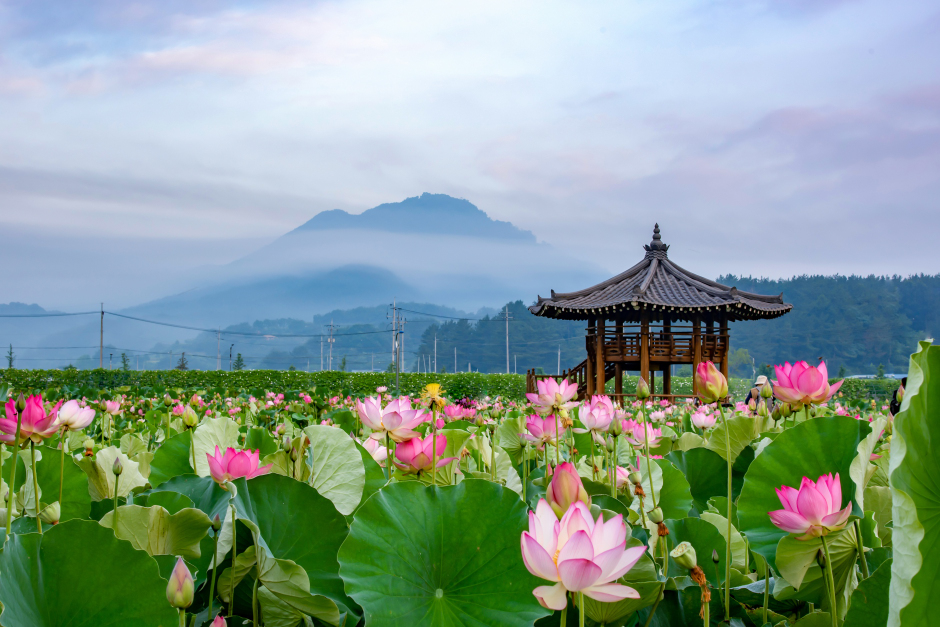
Lotus in Haman, South Korea.
Each ingredient brings something different to the cup.
Some are delicate and floral.
Some are earthy and nutty.
Some carry a fresh, green aroma, while others have a gentle sweetness or roasted character.
Exploring these different flavors is one of the joys of discovering Korean tea.
Tea Shaped by the Land
Much of Korea's traditional tea-growing culture developed in the southern part of the country, where the climate and landscape provide suitable conditions for tea cultivation.
Regions such as Boseong, Hadong, and Jeju have become closely associated with Korean tea.
Yet each region has its own landscape and character.
The rolling tea fields of Boseong create a very different impression from the mountainous tea-growing areas around Hadong, while Jeju offers a unique island landscape shaped by volcanic soil and oceanic surroundings.
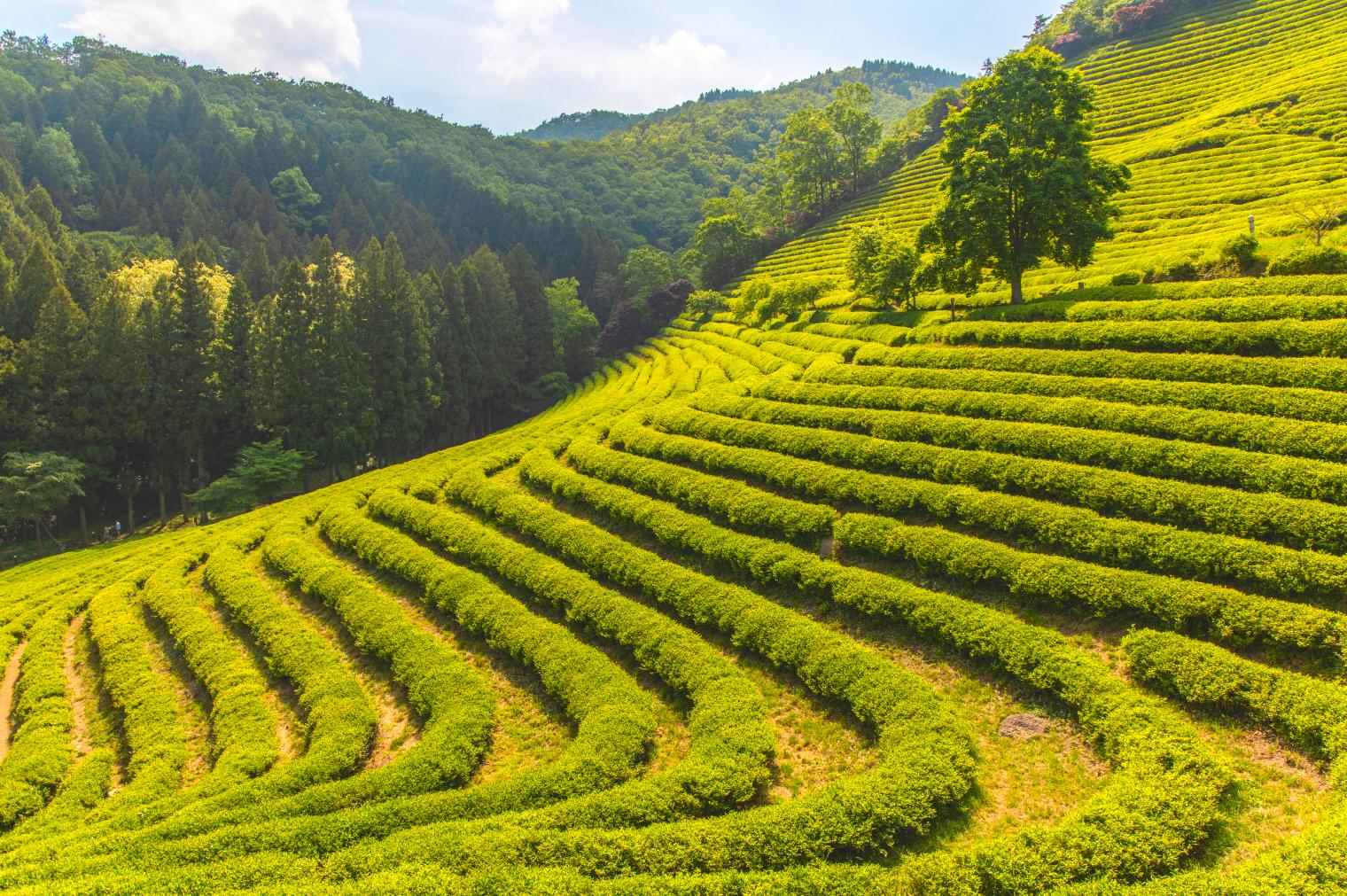 Green tea field in Bosung, South Korea.
These differences are part of what makes Korean tea interesting: a cup of tea can carry a small sense of the landscape where it began.
A Tradition That Continues to Evolve
Korean tea is not simply a tradition preserved in the past.
Today, Korean tea makers are finding new ways to introduce tea to contemporary lifestyles. Traditional teas are being offered in convenient tea bags, while new blends combine Korean ingredients with flowers, fruits, herbs, and other botanicals.
Modern packaging and creative blending have also made Korean tea more accessible to people who may be discovering it for the first time.
For us, this balance between tradition and modernity is one of the most fascinating aspects of Korean tea.
The past provides the foundation, while today's tea makers continue to explore what Korean tea can become.
A Cup of Korea
Tea can tell us something about the place where it comes from.
The plants that grow there, the people who cultivate them, the seasons that shape them, and the traditions that surround them all become part of the experience.
This is what we hope you will discover through Korean tea.
Not simply a new flavor, but a different way of experiencing a moment.
So take a little time.
Choose a tea, warm your cup, and let the aroma unfold.
Welcome to the world of Korean tea.